Real rides. Real notes. No hype.

Vefreedom Cityrang 4.0 delivers real speed and comfort for the money, with an excellent display and strong battery life—plus key drawbacks to know.
Impressively usable for the money (especially the display and battery life), but mechanical brakes and basic suspension limit confidence at top speed.
Rider: 5′10″ / 180 lb. Use: commuting + errands + casual riding over multiple months. Best fit for: comfort-first riders who want speed on a budget.
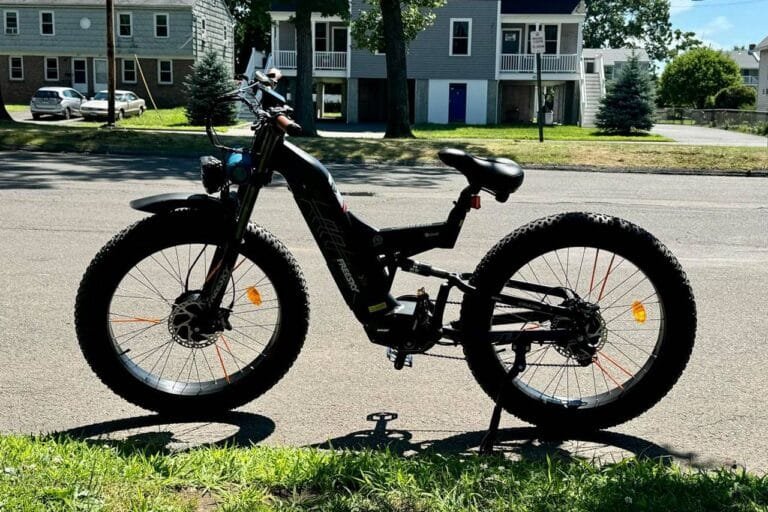
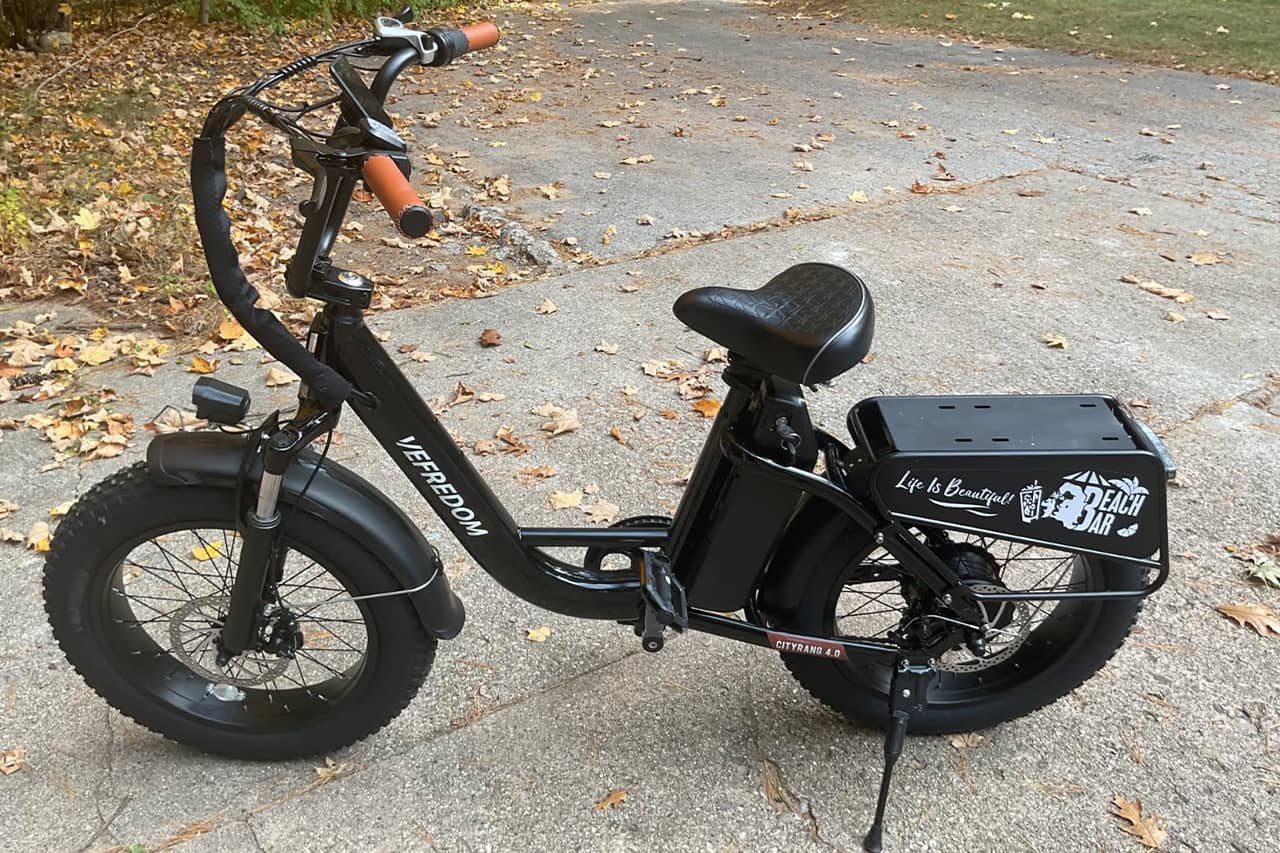
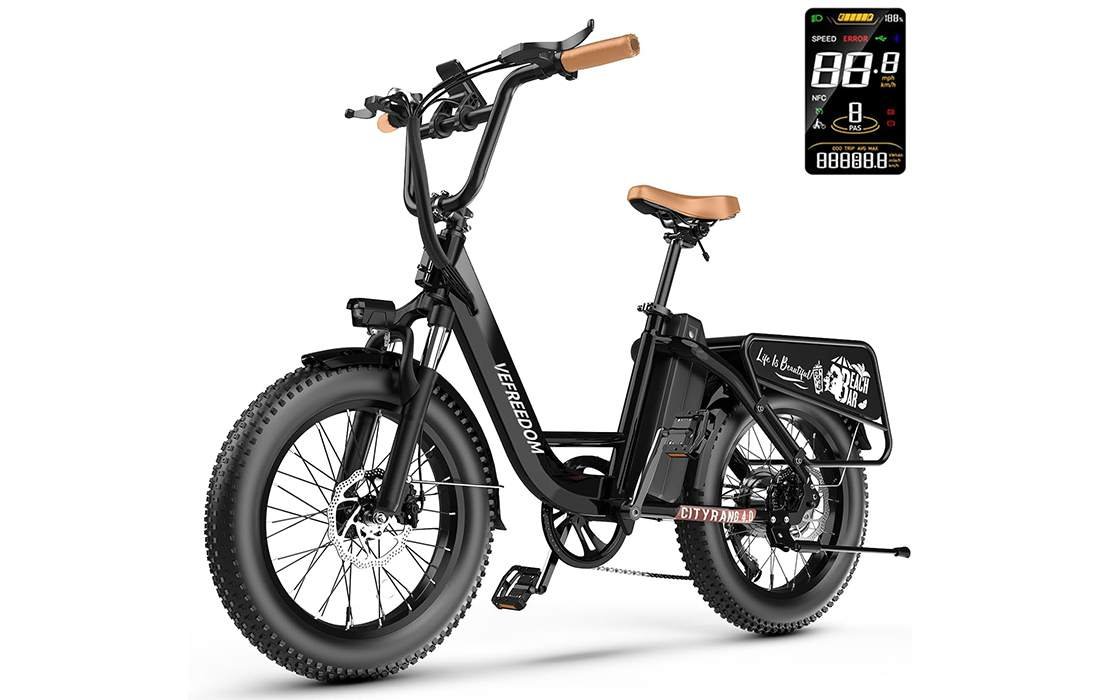
The Vefreedom Cityrang 4.0 is a 20″ fat-tire, step-thru e-bike built around a value-first formula: big battery, punchy hub motor, simple controls, and everyday extras like a rear rack.
I’ve been riding it on regular local trips for the last few months—errands, casual cruises, and the kind of stop-and-go riding that usually exposes weak brakes, sketchy throttles, and annoying displays pretty quickly.
For the money, the Cityrang 4.0 surprised me in the right places (especially the display and the “it just works” reliability), but there are also very real compromises at this price—mainly braking feel, suspension quality, and the typical “cadence-sensor personality” at low speed.
One-sentence verdict: A strong choice for budget riders who want a fast, comfortable step-thru cruiser/commuter, but not ideal if you demand hydraulic braking feel, a torque-sensor ride, or a lighter bike for stairs.
Best for:
Not ideal for:
Biggest strength: For the price, it delivers a “fast, stable, feature-complete” ride with surprisingly good day-to-day usability.
Biggest trade-off: Mechanical brakes + basic suspension mean more tweaking and less refined control—especially at higher speeds.
In practical terms, this is one of those “do a bit of everything” budget fat-tire step-thrus. The design intent is clear:
It’s also positioned as a value pick in the roughly $700 class, where a lot of bikes look similar on paper—but don’t always feel similar once you’re riding and maintaining them.
| Spec | What you should know |
|---|---|
| Motor | 750W hub motor (peak output claimed higher) |
| Battery | 48V 20Ah removable (long-range capacity class) |
| Claimed range | Up to ~70 miles PAS / ~30+ miles throttle (claims vary in real life) |
| Claimed top speed | ~30+ mph potential |
| Drivetrain | 7-speed (my bike came with a Shimano drivetrain, which I didn’t expect at this price) |
| Tires | 20″ x 4.0 fat tires |
| Brakes | Mechanical disc brakes |
| Suspension | Front suspension fork (basic, functional) |
| Display | Bright, clear color LCD style display (excellent for the price) |
| Extras | Rear rack; multiple ride modes / PAS levels |
If you want a fast, comfortable step-thru that’s easy to live with—and you’re realistic about what $700 buys—this bike makes sense. The big win is that it feels like a complete package: it arrives well-protected, goes together quickly, the controls are simple, and it keeps working without drama.
It fits riders who:
Be blunt with yourself here—this section prevents buyer’s remorse.
Packaging and assembly were excellent. Both bikes arrived intact, and assembly took me about 20 minutes each. That’s the kind of setup experience that sets the tone: no bent rotors out of the box, no mystery bolts missing, no “why is this rubbing?” panic.
The first thing that stood out once powered on was the display. It’s bright, clear, and easy to navigate—far better than I expected at this price. Controls are simple enough that I didn’t need a learning curve.
The early trade-off was also obvious: the suspension and mechanical brakes are “decent at best.” They work, but they don’t feel premium, and you can tell where the money went (battery/display) and where it didn’t (refinement).
In higher-speed riding, the Cityrang 4.0 delivers what many people want: it can get to speed without drama, and it doesn’t feel like it’s barely hanging on.
But here’s the practical reality: 30 mph “effortlessly” is fun—and also where cheap brakes and basic suspension start to matter. At that pace, you need to ride with more margin:
The good news is that the controls and display make it easy to monitor what you’re doing. The bike doesn’t feel confusing. The bike feels straightforward.
The listing makes big range claims, and the battery capacity class here is legitimately strong. In my riding, battery life has been genuinely impressive, and that’s part of why I’ve been happy with this purchase.
That said, real range is mostly a speed decision:
Top 3 range killers on this bike: higher sustained speed, lots of stops/starts, and low tire pressure on fat tires.
In real life: if your round-trip commute is ~8–12 miles, you’re often looking at multiple days per charge—depending on how fast you ride.
The comfort story is simple: step-thru + fat tires = easy living. For casual riders and errand riders, that matters more than a spec sheet.
The front suspension is functional, but not transformative. I’d describe it as taking the edge off, not smoothing everything out. On rough pavement, the fat tires do a lot of the work—so dialing tire pressure correctly is a bigger comfort lever than people expect.
The brakes are the clearest “price point” signal.
Mechanical disc brakes work—but they require:
If you’re planning to ride near top speed often, this is where you should be honest: you can do it, but you’ll want to ride with extra margin—and you may eventually want better pads (or a hydraulic upgrade if the frame/brake mounts support it).
This is one of the best parts of the bike for the money.
The display is bright, clear, and easy to navigate, and the controls are simple enough that I didn’t have to constantly “think about the bike” while riding. That’s a bigger deal than it sounds: a confusing interface makes every ride slightly annoying.
The bike offers multiple riding modes and assist levels, and in practice that means you can tune it for:
With my height (5′10″), the Cityrang 4.0 felt like a natural fit for the category. The step-thru frame makes mounting easy and feels confidence-building, especially when you’re stopping often.
Practical guidance before buying:
Assembly was quick and painless (about 20 minutes for me), and after months of riding, the bikes are still working flawlessly, which is the highest compliment I can give a budget e-bike.
First-week checklist (do this after 10–20 miles):
Service reality: this is a standard, budget-friendly setup—chains, pads, tires are normal wear items. Mechanical brakes are easy to maintain, but they do ask for occasional tuning.
Support/warranty: the listing mentions a 12-month after-sales window for key components—treat this as something to verify with the seller and keep your packaging for a while (smart advice for any shipped e-bike).
From my delivery experience, packaging was excellent and everything arrived intact. Expect the typical basics:
Tip: when you unbox, look through the small parts packaging carefully—keys and small adapters (if included) often hide in the foam or accessory box.
Compared to many other $700-ish 20×4 step-thru fat-tire e-bikes, the Cityrang 4.0 stands out in two ways:
Where it loses to more expensive bikes:
If you want a calmer, more bicycle-like ride, you usually have to spend more—or accept less top-end speed.
Is it good for hills?
Good for typical city hills and short climbs. For long, steep daily climbs, a mid-drive (or higher-torque tuning) is the safer bet.
Is it comfortable for longer rides?
Yes for casual longer rides, mainly thanks to fat tires and an upright step-thru feel. The suspension is “basic comfort,” not luxury.
Can shorter riders fit it?
Step-thru helps a lot, but fit depends on seat height and reach—verify minimum seat height and bar reach before buying.
Is the battery removable / easy to charge?
The listing describes a removable battery and two charging methods. In real life, removable is best if you charge indoors.
How long does charging take?
That depends on charger output and how empty the battery is. For a large-capacity battery like this, expect “overnight” to be the realistic mindset.
What maintenance should I expect?
Brake adjustment (mechanical), chain care, and keeping bolts tight in the first few weeks. Recheck hardware after the first 10–20 miles.
What’s the biggest thing you’d upgrade first?
If you ride fast, I’d start with brake pad quality and brake tuning, then comfort tuning (saddle/grips/tire pressure).
Buy it if: you want a fast, comfortable, budget step-thru with a surprisingly good display and strong real-world usability.
Skip it if: you need premium braking feel, torque-sensor smoothness, or a lighter bike for daily carrying.
Best use case: commuting and errands where you want step-thru convenience, fat-tire comfort, and the ability to cruise briskly.
Main compromise: the bike’s speed potential is real, but braking and suspension refinement are still budget-class.
Would I spend my own money on it? At around the $700 price point, yes—if I accept the trade-offs. The reliability over months, the easy assembly, and the impressive display make it feel like a better value than many “same spec” competitors. I just wouldn’t buy it expecting high-end control at high speed.
| Preview | Product | Price | |
|---|---|---|---|

|
1500W Peak Electric Bike for Adults, 70Miles & 30MPH Electric Bicycle, 20”×4.0″ Fat Tires for… | $745 | View on Amazon |