Real rides. Real notes. No hype.

My Wooken Gale review after real miles: a stable, comfortable 26x4 fat-tire e-bike with strong value—held back by weight and brakes.
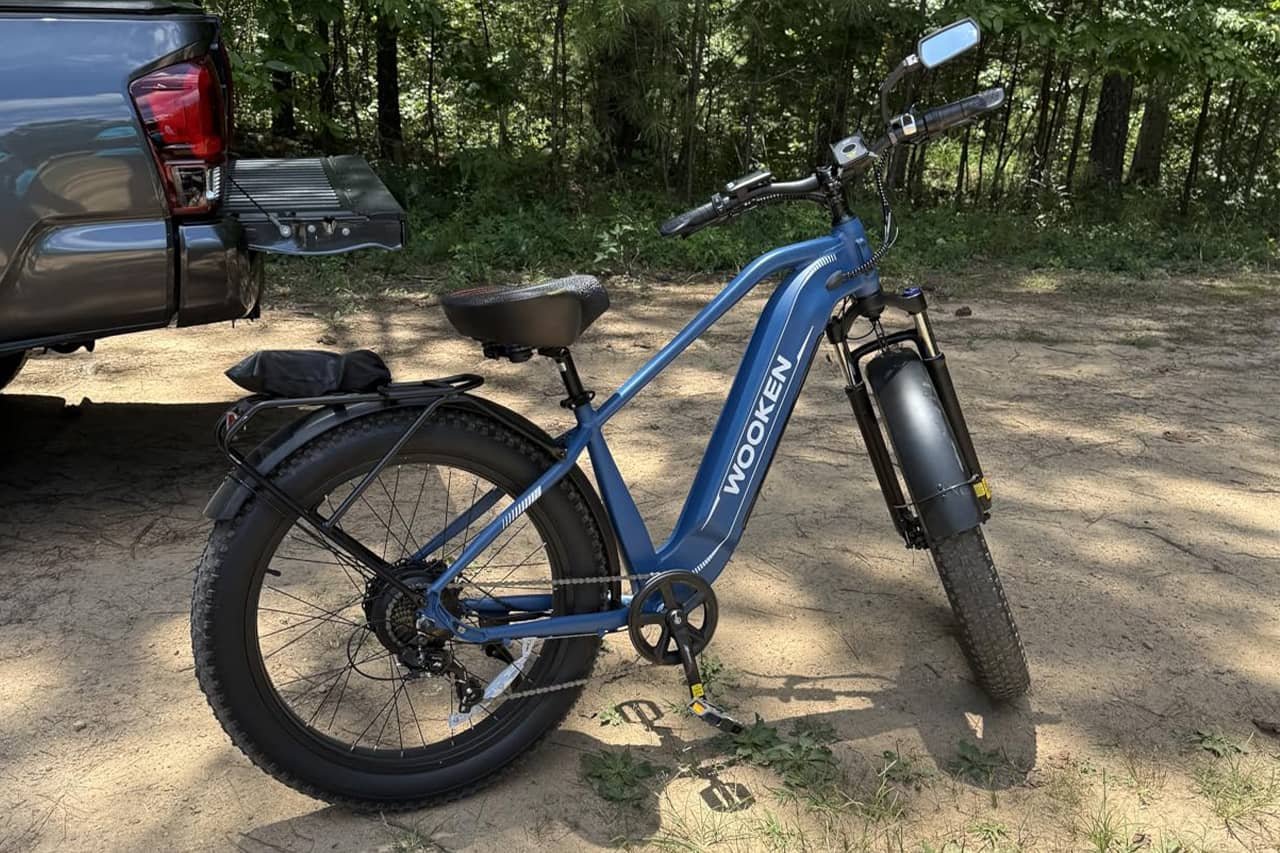
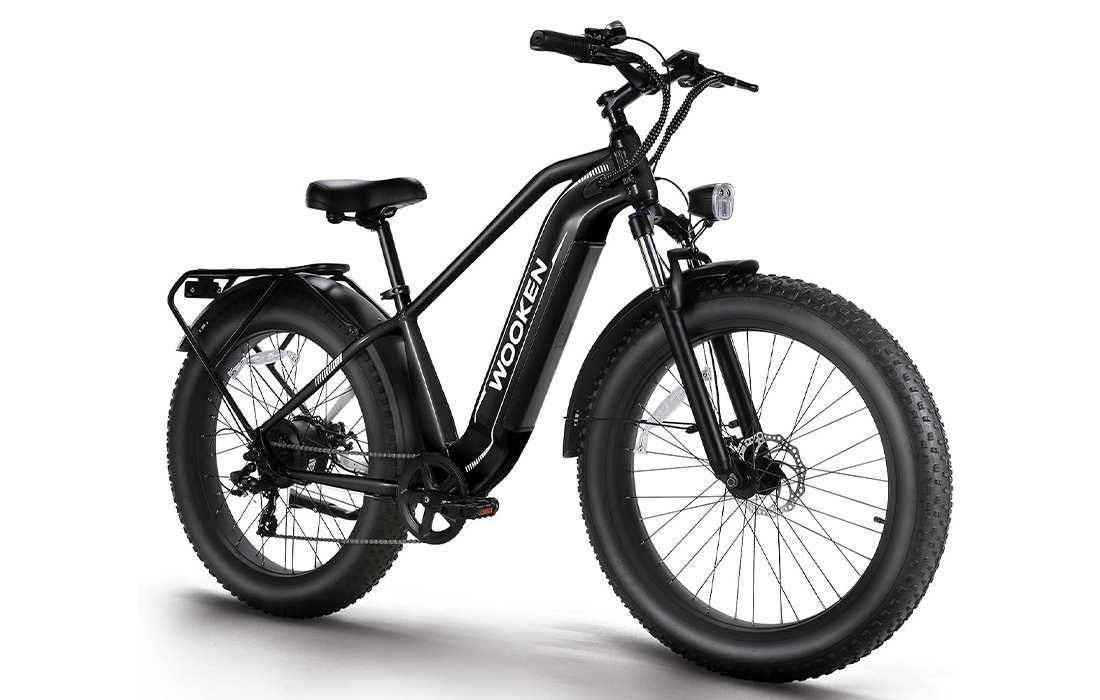
Planted and comfortable at everyday speeds with fat-tire confidence, but the heavy build and “just OK” braking matter for hills and fast stops.
Tested: ~400 miles over multiple weeks on rough pavement + gravel. Rider: 5′10″ / ~180 lb. Best fit for: relaxed commuting and mixed-surface cruising.
The Wooken Gale is a value-focused 26″ fat-tire e-bike built for relaxed cruising, casual commuting, and “take the long way home” weekend rides—especially if your roads are cracked, sandy, or loose.
I’m 5′10″ and about 180 lb, and after living with this bike long enough to stack real miles on it (roughly 400 total), my takeaway is simple: it’s one of the better “under-$1,000” style deals I’ve ridden for comfort and stability—but the brake performance and the overall weight are the two things you need to accept upfront.
If you’re shopping for a confidence-inspiring fat-tire e-bike that’s easy to assemble and easy to enjoy at a 20 mph pace, the Gale makes a strong case. If you want crisp braking feel, lighter handling, or a more “bicycle-like” ride, you’ll want to keep looking.
One-sentence verdict: The Wooken Gale is a strong choice for relaxed fat-tire cruising and mixed-surface riding on a budget, but not ideal if you need lighter weight or truly confident braking on fast descents.
Best for:
Not ideal for:
Biggest strength: Surprisingly comfortable, planted ride quality for the money—great “real world” stability at everyday speeds.
Biggest trade-off: Brakes feel like the limiting factor, especially considering the bike’s weight and fat-tire momentum.
Here’s exactly how I rode it and what I paid attention to:
Important note: I did not do a strict battery-to-zero range test. Instead, I’m giving realistic expectations based on how the bike behaves at different speeds and how 720Wh fat-tire bikes typically consume power.
The Gale is essentially a budget-friendly, comfort-first fat-tire e-bike aimed at riders who want stability and easy power without worrying about babying the bike on rough surfaces.
The standout design choice is the integrated / embedded battery look (still removable), plus the “big-bike” feel: fat tires, sturdy frame, rack, and fenders. The overall vibe is practical and straightforward—more about riding confidently than riding fancy.
It’s also positioned as a “safety-certified” option in its category (brand claims SGS certification to UL standards), which matters because cheap e-bike electrical systems are one of the biggest long-term safety concerns in this price tier.
| Spec | What you’re getting |
|---|---|
| Motor | 750W rated / 1500W peak claimed; ~90 Nm torque claimed |
| Battery | 48V 720Wh removable; 21700 cells claimed |
| Charger | 3A charger; 4–6 hours claimed |
| Range | 40–60 miles claimed (real use varies heavily by speed/terrain) |
| Top speed | 20 mph (my top speed matched this) |
| Tires | 26×4.0 fat tires |
| Suspension | Front suspension fork (lockout shown in product visuals) |
| Brakes | Dual disc brakes; 180mm rotor size shown in product visuals |
| Drivetrain | 7-speed |
| Payload | 330 lb claimed |
| Weight | ~72 lb claimed |
| Display / modes | LCD + 5 riding modes (incl. cruise + walk) |
| Certifications | Brand claims SGS certified to UL2849 / UL2271 |
If your main goal is a comfortable, stable e-bike for everyday rides at sane speeds, the Gale fits nicely. The fat tires take the edge off broken pavement and mixed surfaces, and the bike feels confidence-inspiring when you’re not trying to ride it like a lightweight commuter.
It’s best for:
If you want a light bike that feels like a normal bicycle with “invisible” assist, this isn’t that. This is a stable, heavier cruiser with e-power doing a lot of the work.
Be blunt? Sure—this is where returns get prevented.
The first thing I noticed was how planted the bike feels. It doesn’t feel twitchy, and it doesn’t feel flimsy. On rough pavement, it immediately came across as “calm”—the tires and front suspension smooth out a lot.
Second impression: it’s heavier than it looks in photos. That weight translates into stability while riding, but you’ll feel it when maneuvering at low speed or moving it around your garage.
Third impression: the brakes were the only “wait, what?” moment. They work, but the initial bite and overall stopping confidence didn’t match the bike’s mass the way I hoped.
With a 720Wh battery, the battery size is legit for this class—but fat tires punish range at higher speed. Here’s the honest expectation:
Top 3 range killers on this bike: speed, hills, and fat-tire rolling resistance (plus low tire pressure if you run it soft).
Translate to life: If your round-trip commute is ~8 miles, you’re realistically looking at 3–5 commute days per charge depending on how fast you ride and how much throttle you use.
The Gale’s comfort is one of its best traits. Between the fat tires and the front suspension, it’s forgiving on rough pavement, and I had fewer “buzz” fatigue points than I usually get on rigid commuter-style bikes.
What I’d still change:
This is the main “buyer beware” area.
The brakes are functional, but I wanted more bite and more confidence, especially when riding at the top of its speed range or when stopping quickly from 18–20 mph. Some of this can improve with:
But if you’re the type of rider who demands strong braking feel from day one—or you live in an area with long descents—this may be the limiting factor unless you’re willing to tune/upgrade.
On the safety certification side: the brand presents SGS/UL certification materials and QR-based verification in their product content. I like seeing that effort in this price class, but as a buyer, you should still verify documentation for the exact model you’re purchasing.
The LCD display covers the basics: speed, battery, assist level, and mileage. It’s the kind of display you stop thinking about after a week—which is a compliment. Buttons are straightforward, and the riding modes are useful if you actually use them:
Wooken’s own sizing graphic suggests a 5′5″–6′5″ recommended height range. At 5′10″, I felt like the bike fit naturally, with comfortable reach and no weird cramped cockpit feeling.
Notes by rider type:
Tuning tips that actually help:
The bike arrived mostly assembled, and for someone mechanically inclined, it’s a pretty straightforward setup. I’d call it a reasonable, beginner-friendly build overall—though the instructions aren’t perfect, they’re “good enough” if you’ve assembled a bike before.
The slowest parts were typical:
On a bike like this, I always do this quick checklist early:
Based on typical delivery expectations for this category (and how the Gale is presented):
Here are the issues that could genuinely change the buying decision—plus who they affect.
Compared to lighter commuter e-bikes (narrow tires, rigid forks):
Compared to premium fat-tire e-bikes (higher price tier):
Is the Wooken Gale good for hills?
It handles rolling hills well, especially if you use the gears and don’t expect it to feel like a lightweight mid-drive climber. On long climbs, the bike’s weight is what you’ll notice.
What top speed did you actually see?
My top speed matched the stated behavior: 20 mph.
Is it comfortable for longer rides?
Yes—comfort is one of its best traits. Fat tires + front suspension help a lot, especially on rough pavement.
Is the battery removable and easy to charge?
Yes, it’s presented as removable, and the charging time is claimed around 4–6 hours with the included charger.
What range should I realistically expect?
Plan on a wide band. Typical mixed riding is often 25–40 miles, with less if you ride fast or climb a lot.
Does it feel like a torque-sensor bike?
Not in the way the assist ramps. It feels more like “set assist level, get a predictable push,” rather than perfectly matching your pedaling pressure.
What maintenance should I expect early on?
Expect standard new-bike settling: brake tuning, bolt checks, shifting cable stretch, and spoke checks after the first few rides.
What’s the first upgrade you’d consider?
If you’re picky about stopping power, brake tuning (and potentially improving pads/rotors or the braking system) is the first place I’d focus.
Buy it if: You want a stable, comfort-first fat-tire e-bike for mixed surfaces and you value a strong deal more than premium refinement.
Skip it if: You need a lighter bike, you regularly ride steep descents, or you want crisp braking feel without tuning.
Best use case: relaxed commuting and cruising on rough pavement, gravel paths, and everyday “imperfect” roads.
Main compromise: heavy handling off the bike, and brakes that feel like they need extra attention to match the platform.
Personal judgment: If I were shopping strictly for value + comfort + stability around this price, I’d seriously consider it—especially because the ride quality holds up over real miles. But I’d go in already planning to dial in the brakes and accept the weight as the price of fat-tire comfort.
| Preview | Product | Price | |
|---|---|---|---|

|
Wooken Gale Electric Bike for Adults, 26″ x 4.0 Fat Tire Electric Bike,Peak 1500W Motor Ebike with… |
$829 |
View on Amazon |




Just bought on. Only problem I have is that it doesn’t reach advertised speed. And it can’t unlock the settings. Stuck at 19.1mph. Codes don’t work. Only gives me PO1,PO2 and PO6. Nothing else
Thank you for your feedback, Dana. Sorry to hear about the speed and settings issue. Many e-bikes have speed limits due to regulations, and some settings may be locked. I recommend contacting the manufacturer’s support for a solution. If you find a fix, please share it here to help others.