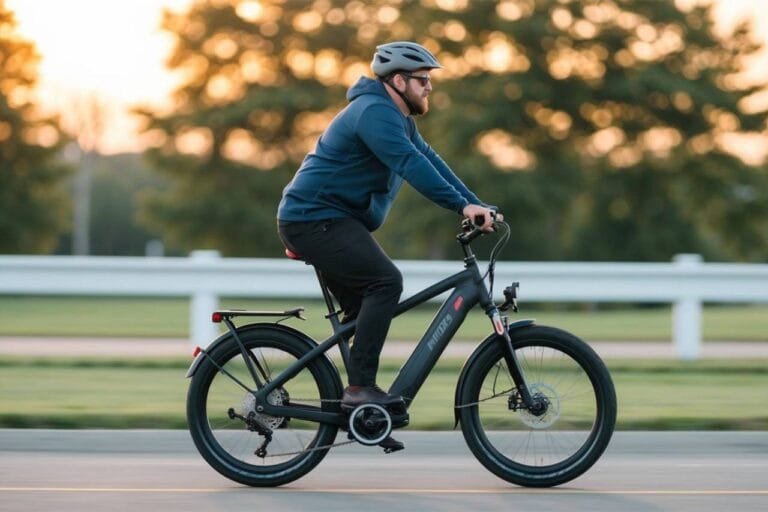
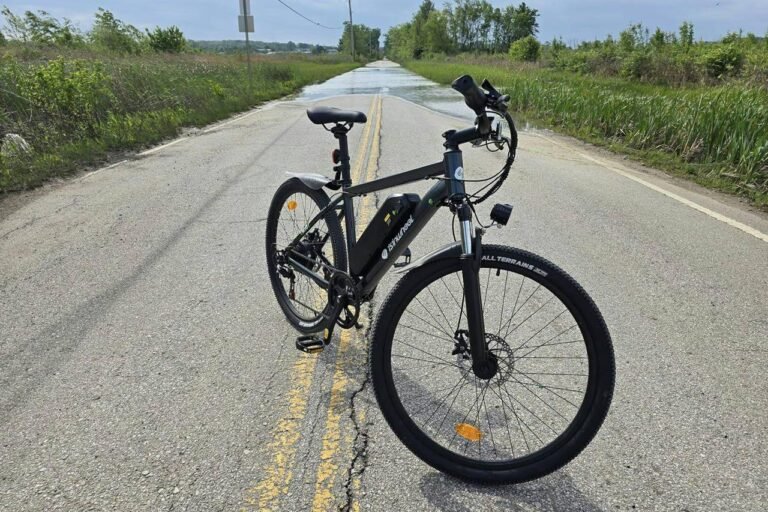
Real rides. Real notes. No hype.

The Velectrec CityRang 2.0 is a fast, step-thru commuter e-bike with strong range and real power—but it’s not without trade-offs.

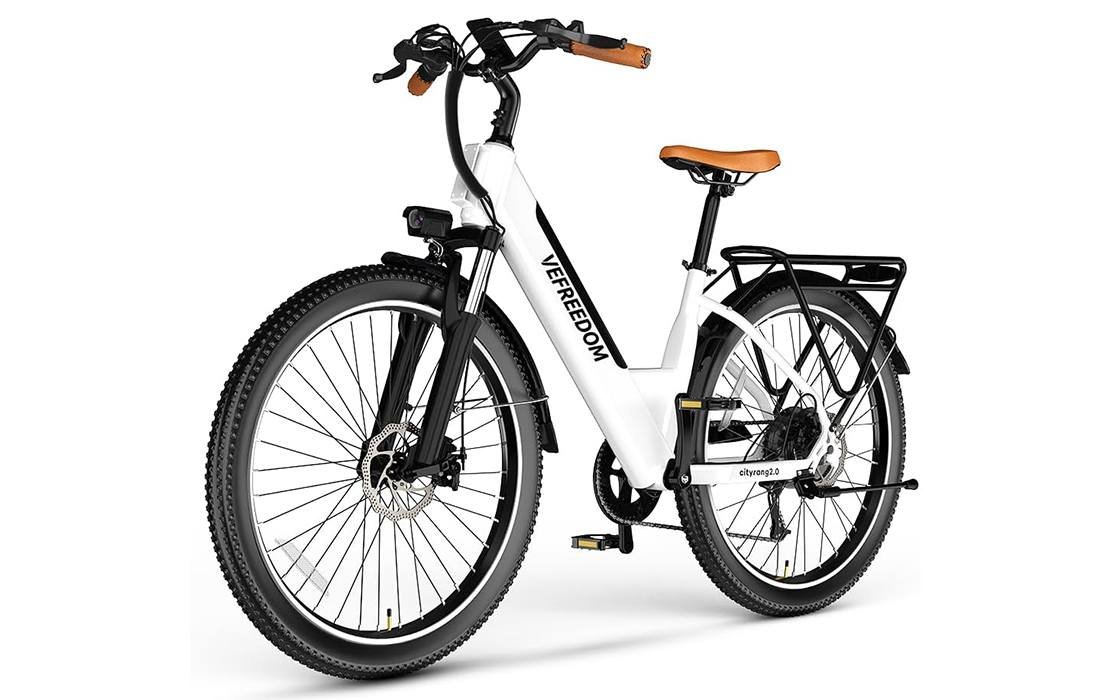
A genuinely quick step-thru commuter with a big 720Wh-class battery and everyday practicality—just expect some setup rough edges.
The Velectrec CityRang 2.0 is a budget-friendly, step-thru commuter-style e-bike with a punchy motor tune, a large integrated battery, and the basics most people actually use: fenders, a rear rack, front suspension, and a simple 7-speed drivetrain. At its list price around $699.99, it’s aimed at riders who want a “get there faster” bike for commuting, errands, and weekend loops—without paying mid-tier e-bike money.
My testing was pretty typical real life: I’m about 5’10”, ~180 lb, riding mostly city streets with moderate hills, spending most of my time in PAS 2–5. I used it the way most owners will: commuting rides where you want consistent speed and stability, plus weekend rides where you’re mixing flatter paths with a few longer pulls.
Best for: Budget-minded commuters who want a quick, easy-to-ride step-thru with real range potential.
Why I like it: It feels genuinely fast for the price, and the step-thru frame + included rack/fenders make it practical from day one.
Watch out for: The “polish” isn’t premium—especially the instructions/assembly guidance—and the braking/suspension package is functional, not fancy.
Motor: 500W class motor with 1000W peak marketing (strong acceleration feel)
Battery & Range (claimed vs tested): Claimed up to 50–80 miles (PAS) / 40–50 (throttle); I saw ~28–45 miles depending on PAS level, hills, and how “fast” I rode
Top Speed: Claimed 25+ mph (some materials mention higher); I consistently saw mid-20s mph on PAS on flat ground when pushing it
Weight: About 61 lb with battery (noticeable if you carry it)
Best for: Commuting, errands, casual weekend rides, and moderate hills
Test conditions:
In plain terms, the CityRang 2.0 is a value commuter that borrows a lot of the “daily-use” features people end up buying later anyway. The step-thru frame makes stop-and-go city riding easier, the rack lets you use it like transportation instead of a toy, and the battery is tucked into the down tube so it doesn’t look like an afterthought.
The overall design goal feels straightforward: deliver speed and convenience at a price that’s accessible, even if that means some parts (like the brakes and suspension) are more “good enough” than “premium.”
This is where the CityRang 2.0 surprised me—in a good way. On PAS 2–3, it already feels like a proper assist bike rather than a “barely helps” budget model. The assist ramps up quickly, and for commuting that matters because you’re constantly restarting from lights and stop signs.
In PAS 3–4, the bike has that “press forward” urgency that makes city riding easier. I could get up to cruising speed quickly, then just maintain it with light pedaling. It feels tuned for momentum—once you’re rolling, it wants to stay rolling.
On moderate hills, PAS 4–5 made the biggest difference. I didn’t feel like I had to stand and grind unless I wanted to. The 7-speed helps you keep cadence reasonable, but the real story is the motor assist: it takes the edge off climbs and makes them predictable.
Motor noise wasn’t a deal-breaker, but it’s not whisper-silent either—more of a normal hub-motor hum when you demand power. The assist delivery felt consistent, though the transition between PAS levels can be a bit abrupt if you’re sensitive to that.
Trade-off: The “fast for the price” tune is fun, but it also encourages riding faster more often, which can reduce your real-world range.
The integrated 48V 15Ah battery is one of the strongest value points here. In real use, what mattered most to me was not the maximum possible miles—it was whether I could ride for a few days of commuting without thinking about charging.
With my 180 lb rider weight, city streets, moderate hills, and riding mostly PAS 2–5, my results lined up like this:
Those numbers are realistic for a 720Wh battery when you’re using it like transportation and not trying to set range records.
Charging time felt in the expected 5–6 hour window. The removable design is useful if you don’t have an outlet near where the bike lives. I prefer being able to bring the battery inside—especially in apartments or shared garages.
Trade-off: The battery is part of why the bike feels substantial; it’s not a featherweight build.
This is a comfortable commuter posture bike, not an aggressive “sport” geometry. The step-thru frame makes frequent stops easier, and it’s genuinely confidence-building in city riding.
I felt upright enough to see traffic clearly, but not so upright that it felt like I was catching tons of wind. For commuting, it’s a good balance.
The front suspension fork helps on cracks, rough pavement, and imperfect roads. That said, it’s a basic comfort fork—not something I’d count on for repeated harsh impacts. The saddle was okay, but on longer weekend rides I could feel it trending toward “average.” If you’re sensitive to saddles, that’s one of the first upgrades I’d consider.
At commuting speeds, it felt stable and predictable. At higher speeds (mid-20s), it still felt planted enough, but you become more aware of the bike’s weight and the limits of its comfort-oriented suspension.
The bike uses disc brakes front and rear. In normal commuting, they did what I needed: controlled stops, predictable deceleration, and decent confidence in dry conditions.
Here’s the honest part: the braking feel is not premium. Mechanical disc brakes typically require a bit more lever effort than hydraulics, and you may need occasional adjustment as the pads wear. They’re serviceable and safe when set up correctly, but they don’t have that smooth, one-finger “bite” that better hydraulic systems deliver.
Lighting is functional for being seen, but if you routinely ride at night in darker areas, I’d still recommend a stronger add-on light for true road visibility.
The bike is mostly pre-assembled, and once it’s together, it’s enjoyable. My one real complaint—if I had to pick a fault—was the instructions. They weren’t great. I figured it out eventually, and I’m happy with the result, but the setup experience didn’t match how good the bike feels once it’s dialed.
If you’re comfortable with basic bike assembly, you’ll get through it. If you’re not, you may want a local shop to do a quick safety check (especially brakes and bolt tightness) after you finish.
1) Is it actually fast in real riding?
Yes—“fast for the price” is the right way to put it. On PAS it holds mid-20s mph on flat ground when you’re pushing it, and it feels quick off the line.
2) Can it handle moderate hills?
With PAS 4–5, moderate hills are very manageable. You still need to pedal, but it doesn’t feel like a grind.
3) Is the range really 80 miles?
It depends on how you ride. If you’re light, ride slow, use low PAS, and stay on flatter terrain, you can stretch it. If you ride like a commuter (stops, hills, higher PAS), expect more realistic numbers.
4) Is it comfortable for longer rides?
It’s comfortable for commuting and casual weekend rides. For long-distance comfort, the saddle and basic fork are the limiting factors—not deal-breakers, just not high-end.
5) How hard is assembly?
The bike is mostly assembled, but the instructions aren’t great. If you’ve built bikes before, it’s fine. If not, plan extra time and double-check everything.
6) What surprised me most?
How “non-budget” the motor feel is once you’re riding. The setup experience felt budget, but the riding experience—especially the speed—felt better than I expected at this price.
Score: 8.2 / 10
One-line explanation: A genuinely quick, practical commuter e-bike with strong battery value, held back mainly by setup polish and mid-tier components.
If your priority is getting a fast, useful step-thru e-bike for commuting and weekend rides—without spending a lot—the CityRang 2.0 makes sense. I’d buy it for the performance-per-dollar and the everyday practicality. I would not buy it if I needed something light, premium-feeling out of the box, or equipped with higher-end brakes and suspension.
| Preview | Product | Price | |
|---|---|---|---|

|
VELECTREC Electric Bike for White UL Certification | $649 | View on Amazon |