Real rides. Real notes. No hype.

My Sasikeibike E7 review: a power-first, fat-tire e-bike that rides cushy on rough roads, but the heavy folding frame limits portability.
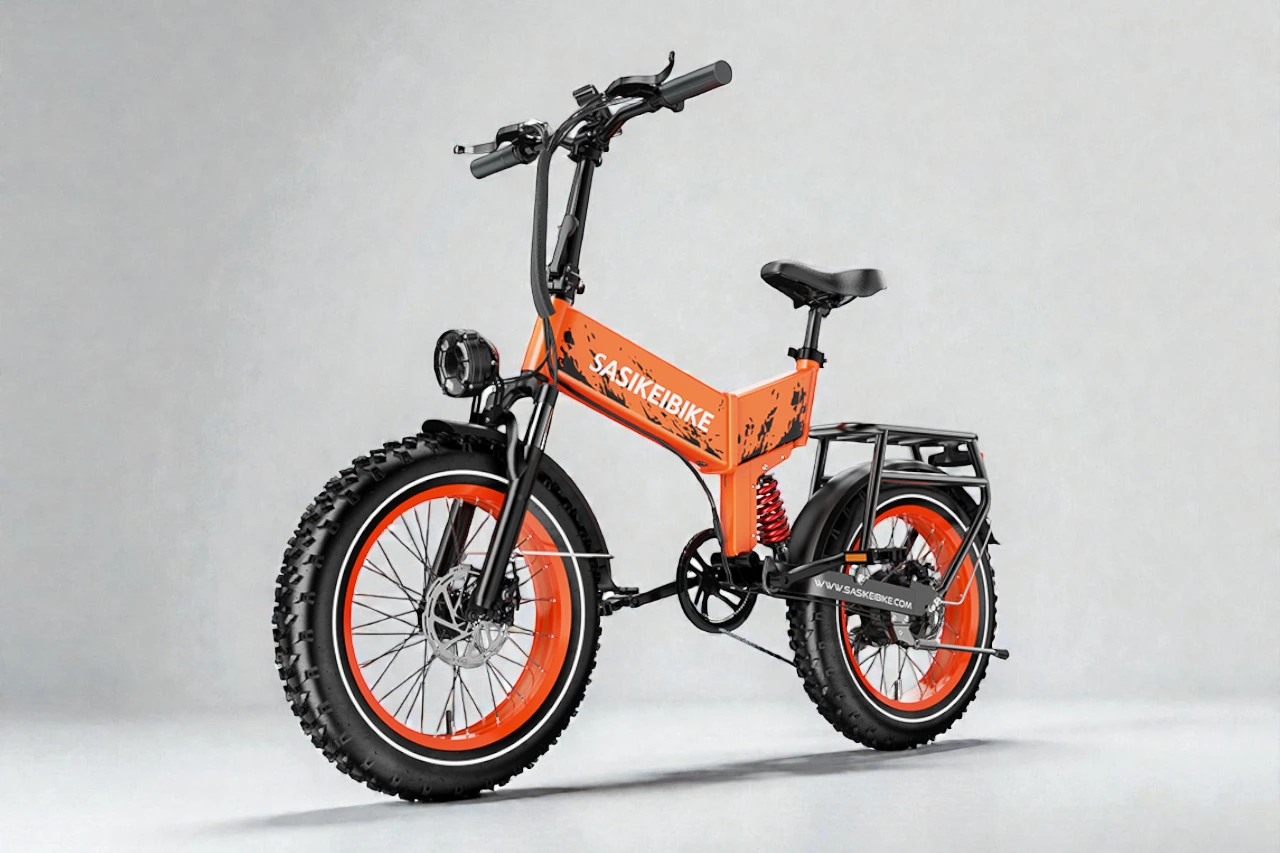
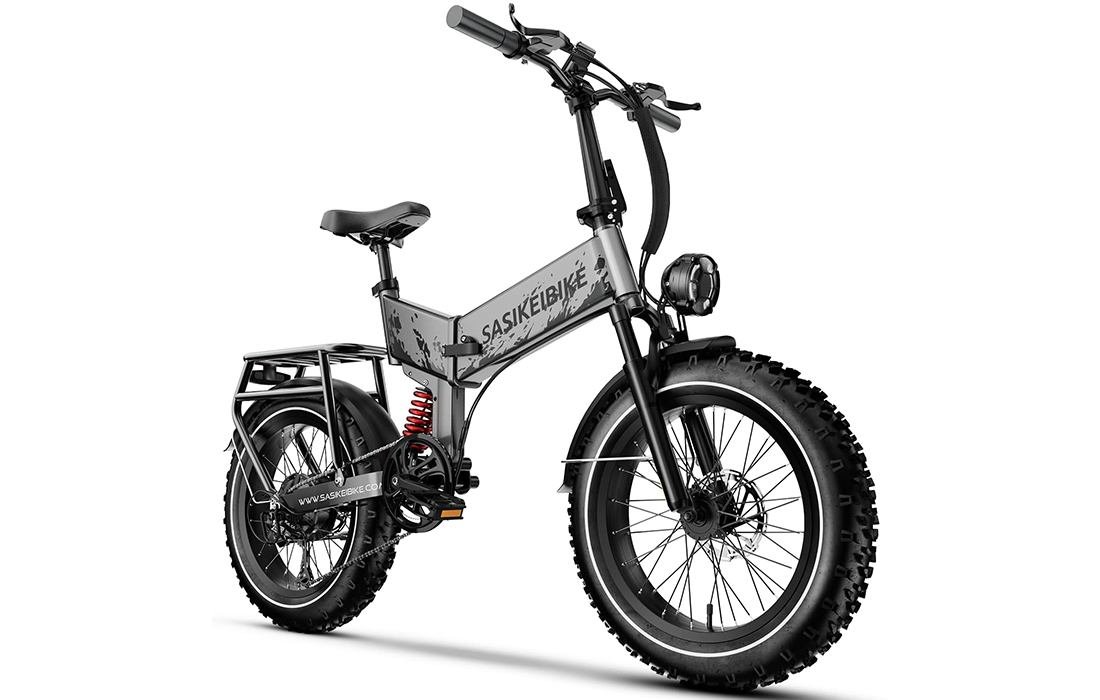
Smooth and confidence-inspiring on broken pavement and light trails, but the heavy “folding” frame is a real hassle for stairs and trunk loading.
Tested: 8+ rides on city streets, cracked pavement, gravel, and short sandy sections. Rider: 5’10” / 180 lb. Best fit for: casual mixed-terrain cruising and errands.
The Sasikeibike E7 is a budget-minded, folding fat-tire e-bike that’s clearly built around one idea: big power, big tires, and a more “mini dirt-bike” vibe than a light commuter feel. With a claimed 52V system, “1500W peak” marketing, full suspension (front + rear shock), and 20″ x 4.0″ fat tires, it’s aiming at riders who want confidence on broken pavement, gravel, sand, or snow—without paying premium-brand prices.
I spent my time with the E7 the way most real buyers will use it: short commuting runs, neighborhood errands, and a couple longer weekend rides where I intentionally hit rough sections, curbs, and patchy trails to see what the suspension and fat tires actually do for comfort and control.
It’s fun, and the value is obvious. But it’s also the kind of bike that reminds you “you get what you pay for” in a few places—most notably weight, portability (despite folding), and the refinement you’d expect from more expensive e-bikes.
One-sentence verdict: The Sasikeibike E7 is a strong choice for riders who want a powerful, cushy fat-tire e-bike for mixed terrain and casual speed, but it’s not ideal if you need a truly portable folder, refined pedal feel, or easy stair/apartment storage.
Best for:
Not ideal for:
Biggest strength: Big-tire confidence + suspension comfort at everyday speeds.
Biggest trade-off: It’s heavy and bulky—even folded—so “folding” doesn’t automatically mean “easy.”
In plain terms, the E7 is a compact-ish, folding, 20-inch fat-tire e-bike that tries to feel tougher and more comfortable than a basic commuter. The design leans into:
This is not a minimalist “bike person’s” e-bike. It’s more like a small utility cruiser that happens to fold—useful for fitting into certain spaces, but still substantial to move around.
| Spec | What the listing says |
|---|---|
| Motor | 52V system, 750W listed with “1500W peak” marketing |
| Battery | 52V 20Ah removable (52V × 20Ah ≈ 1040Wh) |
| Range | Claimed up to ~70 miles (assist) |
| Speed | Claimed 30+ mph |
| Tires | 20″ × 4.0″ fat tires |
| Suspension | Front + rear shock |
| Brakes | Front & rear disc brakes |
| Drivetrain | 7-speed |
| Weight | Around ~65–70 lb depending on battery |
| Payload | Listed around ~300 lb |
| Lights/Display | Headlight + LCD display |
| Certification | Listing mentions UL Certified (verify documentation/labels) |
If your riding is mostly comfort cruising, rough streets, and casual off-road shortcuts, the E7’s fat tires and suspension make it easier to stay relaxed. I’d put it in the “confidence builder” category: it doesn’t feel delicate, and it doesn’t punish you for choosing the ugly route.
It’s also a decent fit for riders who want a more upright posture and like the idea of a folding frame for storage footprint—not necessarily for carrying up stairs.
Skip the Sasikeibike E7 if…
The first thing I noticed: the E7 feels stable and planted—the 20×4 tires and compact wheelbase give it that “mini tank” confidence when you roll over broken pavement.
The second thing: it feels big for a folder. Not in length, but in mass. When you maneuver it in a garage or try to lift the front end to pivot, you feel the weight immediately.
My main surprise was how quickly the bike settles into a comfortable rhythm at everyday speeds. The trade-off is that it doesn’t feel nimble or sporty—it feels more like “point and go.”
The E7 feels most stable when you ride it like a comfort-oriented fat-tire e-bike—steady pace, smooth lines, and no sudden twitchy inputs. The fat tires reduce some “sketch factor” on rough stuff, which I appreciate.
Throttle use is best treated as a tool, not a lifestyle: great for starts, merging, and quick repositioning. I would not buy this bike thinking “I’ll mostly throttle everywhere” unless you accept you’ll be charging more often and putting more stress on wear parts.
PAS steps on budget builds can sometimes feel jumpy; with this bike, I rode in a way that kept transitions smooth—using gears to control cadence and selecting assist based on terrain rather than constantly toggling.
Battery size is listed as 52V 20Ah, which is about 1040Wh. That’s genuinely large for this category, but range is still heavily affected by speed, hills, rider weight, tire pressure, and throttle use.
Here’s a practical planning estimate:
Top 3 range killers on this bike: speed, hills, and fat-tire rolling resistance (especially at lower tire pressure).
Translate to real life: If your round-trip commute is ~8–12 miles, a “typical” plan often looks like 3–5 days per charge depending on assist and wind.
Comfort is where the E7 earns its keep. Between the fat tires and the suspension, the bike takes the sting out of:
That said, comfort tuning matters. Small changes in tire pressure noticeably change how this bike feels—lower pressure is more forgiving off-road, higher pressure is more efficient on pavement. I found it easiest to tune comfort with tires first, then let the suspension do the rest.
Weight distribution feels slightly rear-biased (common with rack + rear hub setups). That can be fine for traction, but it reinforces why you should keep braking expectations realistic and maintain the bike well.
The E7 uses disc brakes, and in my riding they felt “good” for the class: predictable and capable for everyday speeds. But here’s the safety reality:
If you plan to ride fast regularly: treat brake maintenance as a priority, and don’t delay pad replacements.
UL note: the listing mentions UL certification. I would still verify labels and included documentation for clarity on what’s certified (system vs battery), because that detail matters.
The LCD display shows the basics (speed, battery, mileage). In real riding, I mostly cared about:
The rest is “nice to have.” Buttons were straightforward enough to learn quickly. My main practical advice: set your assist levels the way you actually ride (not the way you think you ride), because that’s what keeps the bike feeling predictable.
The listing gives a wide height range, and promotional materials sometimes show different numbers. In practice, at 5′10″, I had no trouble getting comfortable with seat height and reach.
Notes for shorter riders:
This style can still work, but your comfort will depend on standover confidence, seatpost minimum height, and how the cockpit reach feels with the bars adjusted. If you’re near the lower end of the range, prioritize safe starts/stops and make sure you can plant a foot confidently.
Notes for taller/heavier riders:
The bike’s sturdy “utility” feel will appeal to you, but remember: higher speed + higher weight means higher braking demand. Keep the bike maintained and don’t ignore brake feel changes.
Easy tuning tips that actually help:
Assembly: Mine was straightforward. Most of the work was typical: handlebar alignment, tightening key bolts, and making sure the rack/fenders sit straight. If you’ve built an e-bike before, this shouldn’t be intimidating.
First-week checklist (after 10–20 miles):
Service reality:
Fat tires, brake pads, and drivetrain wear will show up faster if you ride fast, throttle heavily, or ride gritty conditions. Budget bikes can be great value—just accept that preventive maintenance is part of the deal.
Warranty/support: The listing mentions a 1-year coverage on motor/battery/charger and a 24-hour response claim. Treat that as “good if true,” but still keep records and verify support channels before you rely on them.
Compared to lighter 20-inch folding commuters:
The E7 wins on comfort and rough-road confidence, but loses hard on portability. A lighter commuter folds better for transit and stairs, even if it feels less “tough.”
Compared to mid-drive trail e-bikes:
The E7 delivers value and casual off-road fun, but it’s not a substitute for a true eMTB when climbs get long, trails get technical, or you need precise control and heat-capable braking.
Is the Sasikeibike E7 good for hills?
For short-to-moderate hills, yes. For steep, sustained climbs daily, you’ll want stronger hill-optimized gearing and ideally a mid-drive.
Is it comfortable for longer rides?
Comfort is one of its best traits. The fat tires and suspension reduce fatigue on rough surfaces.
Can shorter riders fit it?
Possibly, but confirm standover confidence and minimum seat height. Don’t rely only on the listing’s height range.
Is the battery removable / easy to charge?
It’s listed as removable with a lock. In practice, removable batteries are convenient if you can’t bring the bike near an outlet.
How long does charging take?
The listing suggests several hours. Real time depends on the included charger output and how empty the battery is.
What maintenance should I expect?
Brake pads, tire checks (pressure + wear), chain lubrication, and bolt checks—especially early ownership.
Is it safe / does it have verified certifications?
The listing mentions UL certification. Verify labels and included documentation for clarity on what exactly is certified.
What’s the first upgrade you’d consider?
For many riders: brake pads/adjustment quality (setup matters), then comfort touchpoints like saddle/grips.
Buy it if: You want a budget-friendly, powerful, comfortable fat-tire e-bike for mixed terrain and you don’t need to carry it often.
Skip it if: You need true portability, refined pedal feel, or you deal with stairs and frequent lifting.
Best use case: Comfort-first cruising, rough roads, light off-road exploration, and errands with a bit of fun built in.
Main compromise: Weight and bulk—folding helps storage, not effortless transport.
Would I spend my own money on it?
If my priority was value + comfort + power and I had ground-level storage, yes—I’d consider it. If I lived upstairs or needed to lift it into a vehicle routinely, I’d pass and buy something lighter, even if it costs more.
| Preview | Product | Price | |
|---|---|---|---|

|
SASIKEIBIKE Electric Bike-Grey | $799 | View on Amazon |